The Four Levels of Professional Book Editing
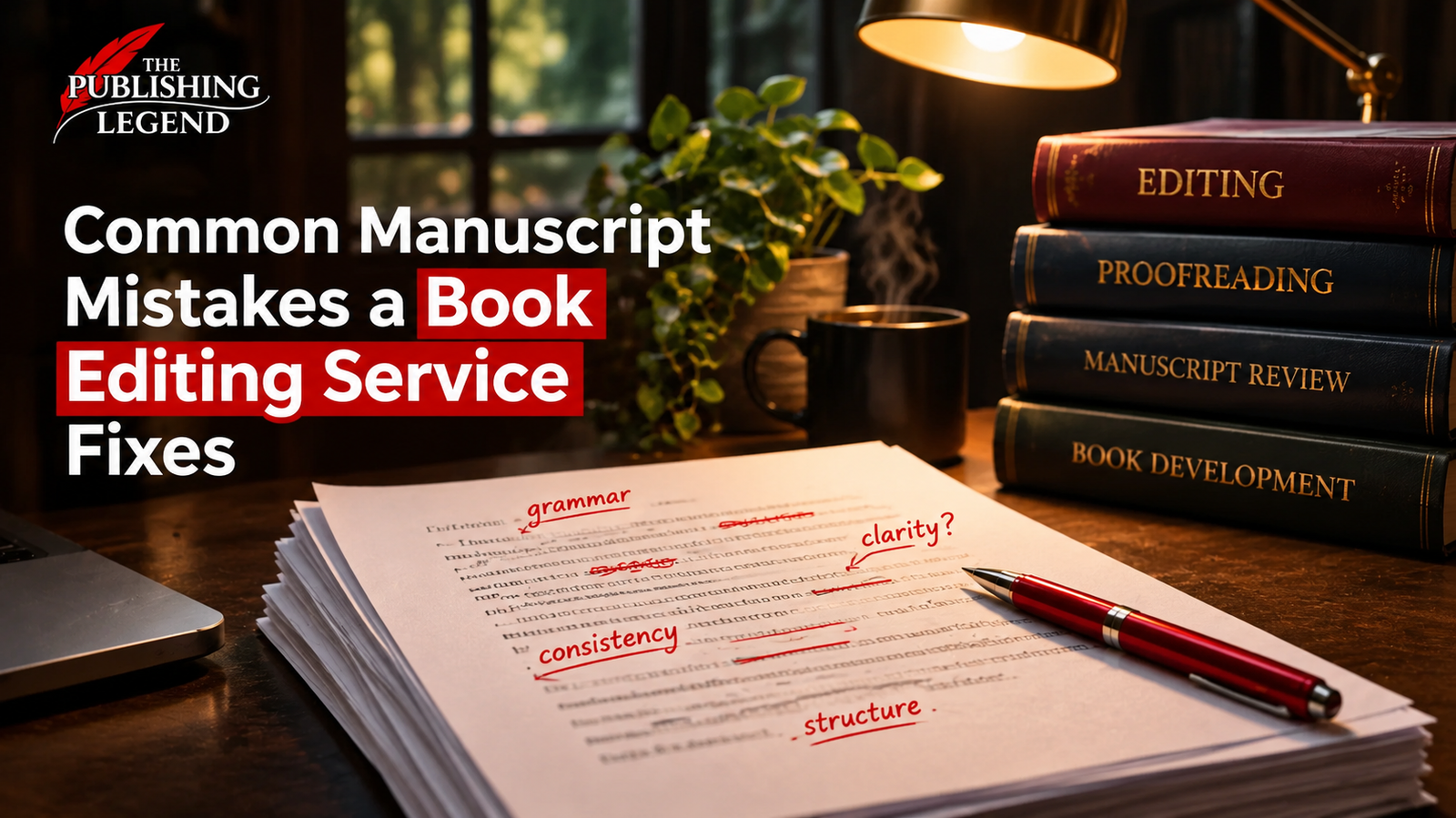
Professional book editing is not one task. It is a sequence of passes, each with a different job. Developmental editing looks at the big picture: structure, pacing, character, argument and whether the book delivers on its promise. Line editing works at the sentence level, improving clarity, rhythm and voice.
Understanding line editing vs copy editing saves money. Copy editing is more technical. It corrects grammar, punctuation, spelling and consistency, usually against a style guide such as the Chicago Manual of Style for US publishing. Proofreading is the final check for remaining typos and layout errors. Each level assumes the previous one is finished, which is why skipping straight to proofreading rarely fixes a manuscript that needs deeper work.
Common Manuscript Mistakes and Which Edit Fixes Them
- Slow opening or unclear stakes (developmental): readers decide quickly whether to continue, so the first chapters must establish why the book matters.
- Sagging middle or loose structure (developmental): scenes or chapters that repeat a point or do not move the story or argument forward.
- Shifting point of view or tense (line editing): slips that confuse the reader and break immersion.
- Overwritten or repetitive phrasing (line editing): the same word, image or sentence pattern appearing again and again.
- Continuity errors (copy editing): a character’s age, a date or an eye color that changes between chapters.
- Inconsistent style (copy editing): variable spelling, capitalization, hyphenation or number style.
- Dialogue punctuation errors (copy editing): common in fiction and memoir, and very visible to readers.
- Typos introduced late (proofreading): errors that appear after revisions or during layout.
Consider a typical scenario (a composite, not a specific client). A memoirist submits a manuscript that jumps between decades without warning, uses three spellings of a relative’s name and ends chapters mid-thought. A developmental editor reorders the chapters into a clear timeline, a line editor smooths the transitions, and a copy editor standardizes names and dates. No single pass would have solved all three problems.
What Editing Will Not Fix
Editing improves a manuscript, but it cannot replace a clear purpose. If you are unsure who the book is for or what promise it makes, settle that before you hire anyone. An editor also cannot guarantee sales, and edits should never change facts or claims you have not approved. Review tracked changes carefully, because you remain the author and the final decision-maker on every page.
A Self-Editing Checklist Before You Hire
A self-editing checklist will not replace an editor, but it lets a professional spend time on bigger problems. Before you send your manuscript, set it aside for a couple of weeks, then read it aloud and mark anything that trips you up. Search for words you overuse, check that names and dates stay consistent, and cut sentences that repeat what the previous one said. Do one pass for one type of problem at a time instead of fixing everything at once.
Beta Readers vs Editors
The question of beta readers vs editors comes up often. Beta readers are volunteers from your target audience who tell you how the book feels: where they got bored, confused or moved. Editors apply craft knowledge and publishing standards to fix the causes. They solve different problems. A common sequence is to self-edit, gather beta feedback, revise, then hire an editor, so the editor is not charging to catch issues a reader could have flagged.
Proofreading Before Publishing and Formatting
The order of work matters. Finish developmental, line and copy edits first, then move to layout. A final proofreading before publishing is best done on the formatted pages, because layout can introduce new errors such as broken lines, misplaced headings or odd hyphenation. If you format first and edit afterward, you may pay to reflow the pages. Our book formatting service works from the edited manuscript for this reason.
You can consider a manuscript ready for publishing when structural edits are complete, the style is consistent, the text has been proofread on its final layout, and someone other than you has read it start to finish.
Choosing Book Editing for First-Time Authors
Book editing for first-time authors goes best when you know what you are buying. Ask for a sample edit of a few pages, check that the editor has worked in your genre, and confirm which style guide they follow. For manuscript editing USA authors can expect, US spelling and Chicago-style conventions are the usual standard. Get the scope in writing, including how many rounds of changes are included.
Frequently Asked Questions
Not always. A polished manuscript may need only copy editing and proofreading, while an early draft usually needs developmental work first. A manuscript review can tell you which levels apply.
It depends on word count, the level of edit and how fast you return revisions. Ask for a milestone schedule instead of a single end date.
Edit first. The final page count affects spine width and cover files, so finish edits before the cover and layout are completed.
A good editor improves clarity while preserving your voice. If edits feel off, say so early so the editor can adjust.
Our book editing service provides developmental, line and proofreading passes from editors who work in your genre, and it connects to our wider book publishing services when you are ready to launch. Request a free quote and tell us where your manuscript stands today.