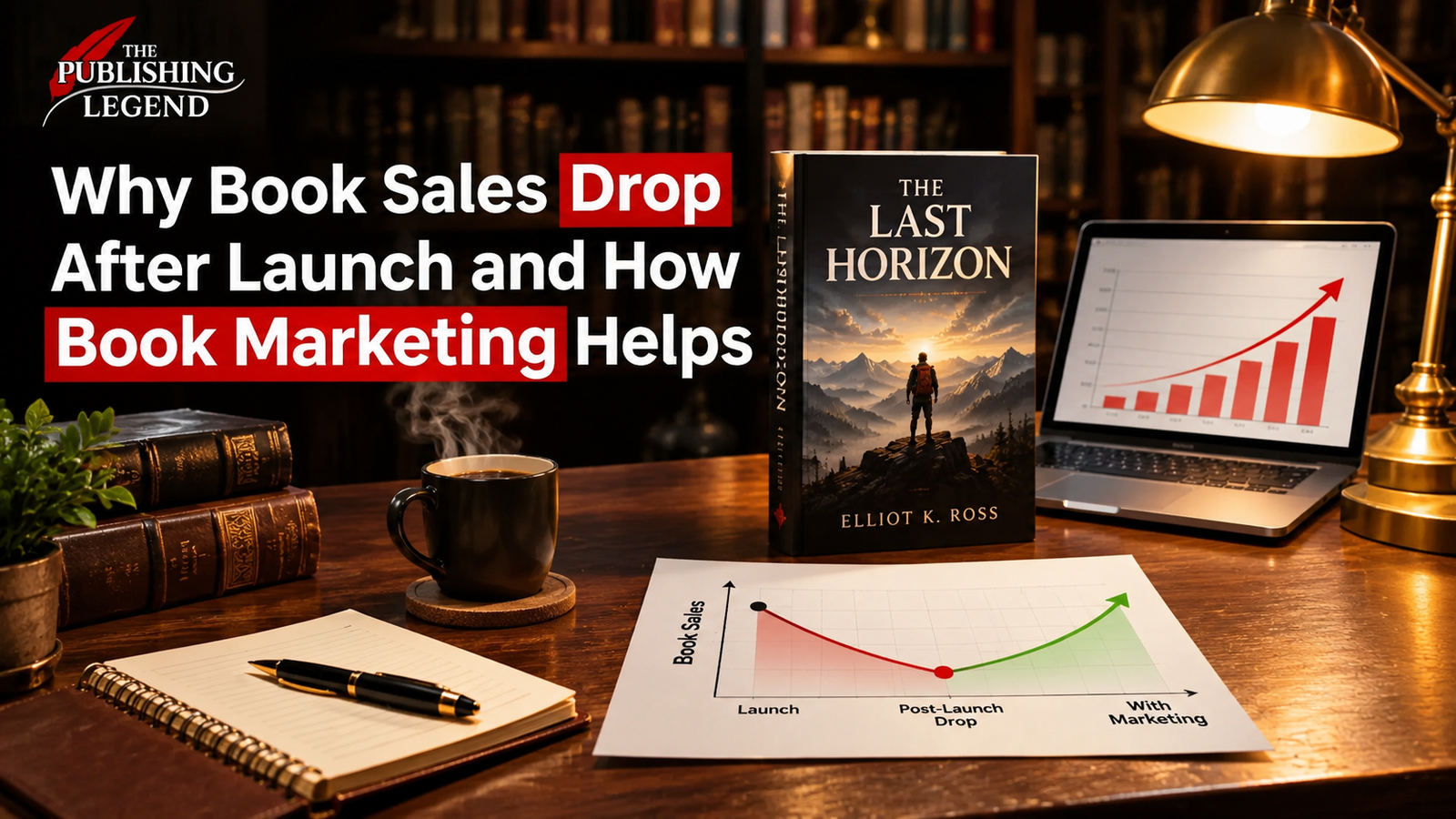
Why Sales Drop After a Launch
The first sales of most books come from people who already know the author. Once that circle has bought, sales depend on strangers finding the book, and that requires a different set of tools. Common causes include no ongoing source of traffic, thin metadata, few reviews, a cover or description that does not convert, and no audience of your own to return to.
Effective book launch marketing treats launch as the start, not the finish. A plan that ends after week one leaves the book to compete on its own, usually against thousands of newer titles.
Diagnose Where Readers Drop Off
Before spending on promotion, find which stage is failing. Think of a shopper’s path in three steps:
- Visibility. If few people see your listing, the problem is discoverability. Check your keywords, categories and whether you are running any ads.
- Clicks. If people see the book but rarely open it, the cover, title and subtitle may not signal the genre at thumbnail size.
- Purchases. If people open the page but do not buy, look at the description, price, reviews and sample.
Your KDP and Amazon Ads reports show impressions, clicks and sales, which tell you where the break is. Fixing the wrong stage wastes time and money.
Consider a typical scenario (a composite, not a specific client). A debut novel earns plenty of impressions but few clicks, and the cover turns out to be the issue: the title is too small and the image gives no hint of the genre. Redesigning the cover fixes the click problem without touching ads or keywords. The same spend on promotion would have sent more people to a cover that was not working.
Book Metadata Optimization and Amazon Book Marketing
Amazon book marketing starts with your listing. Book metadata optimization means using all seven keyword boxes (up to 50 characters each) with phrases readers actually search, choosing up to three specific categories, and writing a description that sells the book within its opening lines. These fields can be edited after publication, so review them regularly. If you are not sure where to begin, our self-publishing service includes setup and listing support.
Amazon Ads for Authors
Amazon ads for authors run on a pay-per-click auction, so every click costs money whether or not it leads to a sale. That is why the order matters: fix your listing first, then advertise. Start small with targeted keywords and review the results before increasing spend. Ads work best as a tool for steady discovery, not a rescue for a listing that does not convert.
Book Reviews on Amazon
Book reviews on Amazon build trust, and readers use them to decide whether to buy. Earn them honestly by asking readers politely, including a short request at the end of the book, and building a small group of early readers. Do not buy reviews. The US Federal Trade Commission treats fake reviews as deceptive, and Amazon removes reviews it considers inauthentic. Read the FTC guidance on endorsements and reviews before running any review program.
Author Platform Building and Long-Term Book Promotion
Author platform building is the work that keeps sales alive after launch: an email list, a simple author website, and a regular presence where your readers spend time. Small, steady actions compound. A newsletter message, a podcast appearance or a guest article each bring in readers you do not have to pay for again. This is the core of long-term book promotion and book marketing for self-published authors. Our book marketing services build launch and ongoing plans around your genre and audience.
When to Relaunch a Self-Published Book
You can relaunch a self-published book at any time. Start with the listing: refresh the description, update the keywords and categories, and review pricing. If the cover is the weak point, consider a book cover redesign that matches current genre expectations. Our book cover design team can help. Then relaunch with a fresh promotion plan so the new version reaches readers, not only existing followers.
A Realistic Post-Launch Plan
A simple schedule keeps promotion from stalling after the first excitement. These are guidelines, not rules:
- Weeks 1 to 4: collect early reviews, fix any listing errors, and note which sources send traffic.
- Weeks 5 to 8: review your metadata, test a small advertising budget, and start a regular email or social routine.
- Weeks 9 to 12: compare results, keep what works, and plan the next push, such as a price promotion or a new edition.
This rhythm works because it replaces guesses with data. Many authors who use self publishing services for setup find that having the listing, cover and files in order from the start makes each of these steps easier.
Frequently Asked Questions
As long as you want it to sell. Many authors keep a light, regular routine going indefinitely and concentrate bigger pushes around relaunches or new releases.
No. Ads are one option. Fix the listing and build your own audience first, then decide whether paid traffic makes sense.
There is no magic number. What matters is that reviews are genuine and that the book keeps earning more over time.
If your sales have stalled, request a free quote and we will look at your listing, cover and marketing plan to find where readers are dropping off.